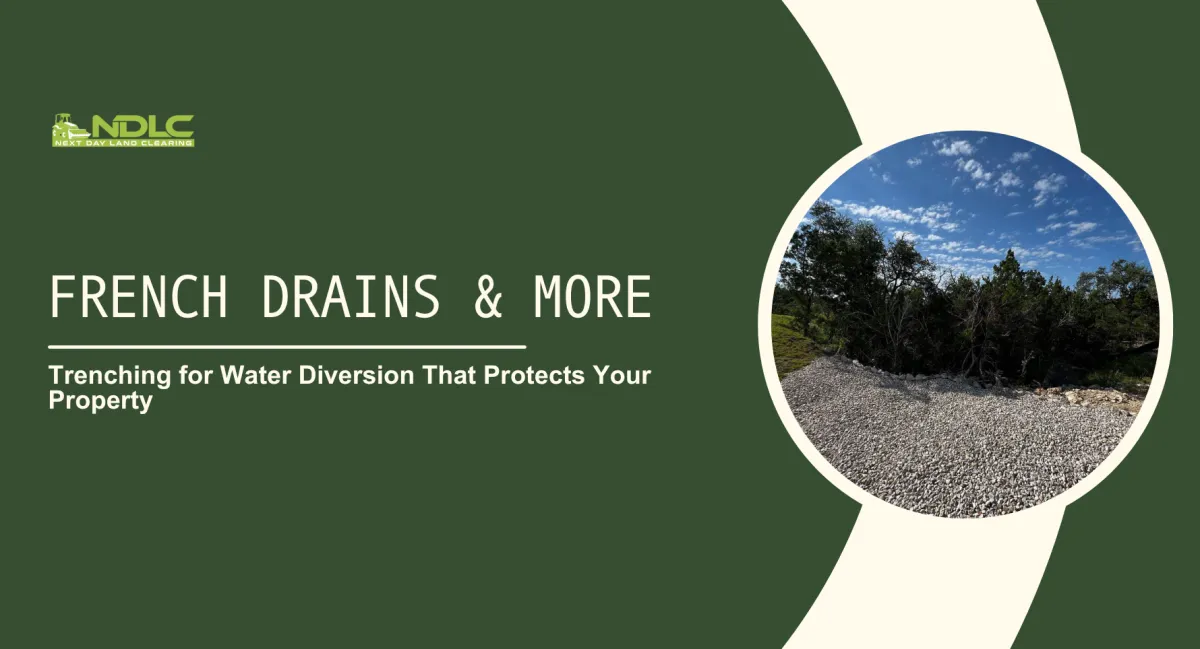
French Drains & More
When spring rains arrive in South Texas, they don’t just bring green pastures and cooler mornings — they also expose drainage problems that have been quietly developing all year. Water pooling near foundations, soggy pastures, eroded driveways, and flooded low spots aren’t just seasonal inconveniences. Left unaddressed, they can turn into costly repairs, lost land usability, and long-term structural damage.
The challenge is that many landowners wait until water is already causing damage before taking action. By then, access is harder, soil is saturated, and quick fixes rarely solve the root issue. That’s why advance preparation matters — and why trenching for water diversion, including French drains and custom drainage solutions, is one of the most effective steps you can take before spring runoff begins.
In this guide, we’ll break down how trenching works, when French drains make sense, when they don’t, and how professional site preparation and land grading can protect your investment long-term. Whether you’re managing a ranch, preparing a homesite, or dealing with recurring drainage issues, understanding your options now puts you ahead of the problem instead of reacting to it later.
Why Water Management Is a Landowner’s Responsibility — Not Just a Seasonal Issue
Water follows gravity, not property lines or construction plans. In South Texas, unpredictable rain patterns, rocky soil, and clay-heavy ground can cause runoff to move fast and settle where you least expect it.
Poor drainage often shows up as:
Standing water near buildings or mobile homes
Muddy, unusable pasture areas
Washed-out driveways or access roads
Soil erosion along fence lines
Tree roots exposed by runoff
Foundation shifting or cracking
These problems don’t resolve themselves when the rain stops. Each storm compounds the damage, slowly changing how water flows across your property. Trenching for water diversion interrupts that cycle by intentionally directing water away from vulnerable areas.
Understanding Trenching for Water Diversion
At its core, trenching is about control. Instead of allowing water to carve its own unpredictable path, trenching creates a planned route that moves water safely and efficiently away from critical areas.
Professional trenching contractors evaluate:
Natural slope and elevation changes
Soil type (rocky, clay-heavy, sandy)
Existing structures and utilities
Drainage outlets and discharge points
Future land use plans
From there, a drainage system is designed — sometimes as simple as a diversion trench, other times incorporating French drains, grading, or rock-lined channels.
What Is a French Drain — and When Does It Work Best?
A French drain is a gravel-filled trench containing a perforated pipe that collects and redirects water underground. It’s a proven solution for specific drainage challenges, especially where surface water needs to be intercepted before it reaches structures.
French drains are most effective when:
Water consistently pools in the same location
Soil drains poorly and traps moisture
Water needs to be redirected away from foundations
The slope allows gravity-assisted flow
However, French drains are not a one-size-fits-all fix. In rocky South Texas terrain, improper installation or shallow trenching can reduce effectiveness. That’s why professional site work specialists assess whether a French drain is the right solution — or if alternative trenching methods will perform better long-term.
Beyond French Drains: Other Trenching Solutions That Matter
Many drainage problems require more than a standard French drain. Depending on the land and intended use, trenching may include:
Surface Diversion Trenches
Shallow trenches designed to redirect runoff before it reaches sensitive areas like driveways, building pads, or fence lines.
Swales and Graded Channels
Wide, gently sloped channels created through land grading services to guide water naturally without erosion.
Rock-Lined Trenches
Ideal for areas with heavy flow where erosion is a concern, especially on ranch land or along access roads.
Underground Utility Trenching
Strategic trenching that accommodates drainage alongside utilities without compromising infrastructure.
Each solution works best when paired with proper grading and soil preparation — something DIY methods often overlook.
Why Advance Drainage Planning Saves Money
Waiting until water damage becomes visible often means higher repair costs and limited options. Planning trenching and drainage work ahead of spring runoff offers several advantages:
Dry ground allows precise excavation
Equipment access is easier and safer
Drainage systems can be integrated with other site preparation work
Long-term solutions replace temporary fixes
Advance planning also allows landowners to combine drainage trenching with services like land clearing South Texas, lot clearing, or driveway preparation services — reducing overall project costs and disruption.
Drainage Challenges Unique to South Texas Properties
South Texas presents specific challenges that require specialized land clearing equipment and experienced operators:
Rocky soil that resists shallow trenching
Clay layers that retain water
Flat terrain with minimal natural runoff
Dense brush that hides natural drainage paths
Professional trenching contractors South Texas understand how to navigate these conditions without over-excavating or damaging surrounding land.
Drainage for Residential Properties and Homesites
For residential landowners, poor drainage can impact comfort, safety, and property value. Trenching solutions help:
Protect foundations and slabs
Keep yards usable year-round
Prevent mosquito breeding from standing water
Safeguard mobile home site preparation areas
When combined with proper land grading services and sod preparation services, drainage trenching sets the stage for a stable, livable homesite.
Ranch Land Clearing and Drainage Go Hand in Hand
On ranch properties, water mismanagement can reduce usable acreage and damage fencing, gates, and livestock areas. Ranch land clearing paired with trenching helps:
Preserve pasture integrity
Reduce soil erosion
Protect tank construction and pond systems
Improve long-term land usability
Fence line clearing services often uncover hidden drainage problems — making trenching a natural next step in property improvement.
Construction Site Drainage: Setting Projects Up for Success
Construction site clearing without proper drainage planning invites delays and rework. Trenching for water diversion ensures:
Stable building pads
Safe equipment access
Reduced downtime after rain
Compliance with site preparation standards
For site preparation contractors, drainage trenching is not an add-on — it’s a necessity.
Why Professional Trenching Beats DIY Every Time
While it’s tempting to rent equipment and dig a trench, improper slope, depth, or placement can worsen drainage issues instead of solving them. Professional land clearing companies provide:
Accurate slope calculations
Proper trench depth for soil conditions
Safe discharge planning
Integration with grading and clearing services
With skilled land clearing operators and specialized land clearing equipment, professional trenching ensures water moves where it should — not where it shouldn’t.
How Drainage Fits Into a Bigger Land Improvement Plan
The most effective drainage systems are planned alongside:
Land clearing San Antonio projects
Forestry mulching South Texas
Driveway preparation services
Rock crushing services
Retaining wall installation
When trenching is coordinated with these services, the entire property benefits from improved stability and usability.
What to Expect During a Trenching Project
A professional trenching project typically includes:
Site evaluation and water flow assessment
Utility location and safety checks
Precision trench excavation
Installation of drainage materials if required
Backfill and stabilization
Final grading to ensure proper runoff
Fast, efficient execution minimizes disruption and ensures results last.
The Next Day Difference: Drainage Done Right
At Next Day Land Clearing, drainage trenching isn’t rushed — it’s done right. With experience in emergency land clearing, fast brush removal, and site work specialists who understand South Texas terrain, NDLC helps property owners plan ahead instead of reacting later.
From overgrown property clearing to trenching contractors South Texas trust, NDLC delivers professional land clearing and drainage solutions built for long-term performance.
Ready to Take Control Before Spring Rains Hit?
Spring runoff doesn’t wait — and neither should you. Whether you’re dealing with existing drainage issues or planning ahead to protect your property, professional trenching and water diversion solutions make all the difference.
Ready to take the next step?
Call us today at 210-864-8342 for a FREE estimate and let's discuss your project!
Visit Nextdaylandclearing.com for information.
