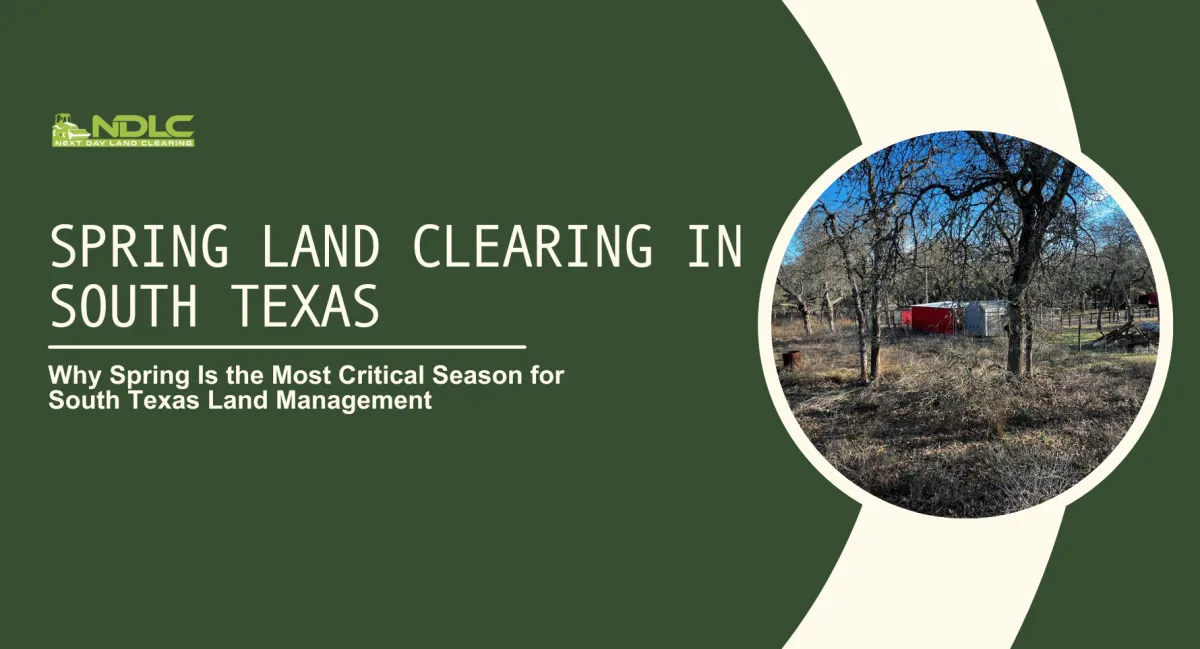
Spring Land Clearing in South Texas
If you've spent any time owning land in South Texas, you already know the truth: spring doesn't ease in gently around here. One week the brush looks manageable, and the next, it's chest-high and spreading fast. Cedar, mesquite, huisache, and native grasses don't wait for your schedule. Once the temperatures climb and the spring rains hit, everything on your property shifts into overdrive.
That's exactly why right now—before the growing season explodes—is the single most important window for South Texas landowners to take control of their property. Whether you're managing ranch land, prepping for construction, improving a residential lot, or clearing overgrown acreage you've been putting off, the decisions you make in the next few weeks will shape your entire year.
Spring land clearing isn't just about making things look better. It's about protecting your investment, preventing problems that get exponentially harder to fix later, and setting your property up for whatever comes next—whether that's building, grazing, selling, or simply enjoying the land you own.
This guide walks you through everything you need to know about preparing your South Texas property for spring, the most common mistakes landowners make when they wait too long, and the steps you can take right now to stay ahead of the season.
Why Spring Is the Most Critical Season for South Texas Land Management
South Texas has a climate that rewards those who plan ahead and punishes those who procrastinate. The region's combination of mild winters and explosive spring growth creates a narrow window where land clearing, brush removal, and site preparation are most efficient and cost-effective.
Here's what happens when spring hits and you haven't acted:
Brush species like mesquite and cedar grow aggressively once soil temperatures rise, making brush clearing services significantly more labor-intensive by late April.
Invasive grasses and weeds establish deep root systems quickly, meaning what could have been a simple forestry mulching job in March becomes a major overgrown property clearing effort by May.
Wet ground conditions from spring rains can limit equipment access, creating scheduling delays for bulldozing services and heavy machinery operations.
Wildlife nesting seasons can introduce regulatory considerations that affect your timeline for tree removal in South Texas.
Construction projects that depend on site preparation lose weeks—sometimes months—when land clearing gets pushed into the hotter, busier summer season.
The bottom line: land clearing in South Texas is always easier, faster, and more affordable when you do it before everything starts growing. That's not a sales pitch. That's decades of working this land talking.
Assessing Your Property: Where to Start Before You Call Anyone
Before you pick up the phone for a land clearing quote, it helps to walk your property with a clear eye and understand what you're dealing with. Not every acre needs the same approach, and knowing what's on your land helps you communicate more effectively with your land clearing contractor and avoid surprises.
Walk the Entire Property Line
Start at the perimeter. Fence line clearing is one of the most overlooked spring tasks, but it's also one of the most important. Overgrown fence lines create fire risk, harbor pests, hide fence damage, and make it nearly impossible to manage livestock or maintain boundaries.
As you walk, take note of areas where brush has encroached on fence posts, where trees are leaning into fence wire, and where visibility has been reduced. Fence line clearing services are one of the fastest ways to improve both the function and appearance of ranch land, and spring is the ideal time to get it done.
Identify Problem Species
South Texas is home to some of the most aggressive brush species in the country. Cedar (Ashe juniper) is the most notorious—it consumes water, crowds out native grasses, and spreads rapidly when left unchecked. Mesquite, while iconic, creates dense thickets that reduce usable acreage. Huisache grows fast and thorny, making it a nightmare for livestock and equipment.
If you're seeing any of these species gaining ground on your property, spring is the time to remove cedar trees in South Texas and knock back mesquite before they establish this year's growth. Forestry mulching is particularly effective for these species because it grinds the brush into mulch on-site, eliminating the need for hauling and burning while returning nutrients to the soil.
Check for Rocky Ground and Drainage Issues
South Texas is known for its rocky soil, particularly in the Hill Country and areas west of San Antonio. If you're planning any kind of construction, driveway installation, or grading work, you need to understand the rock situation on your property before clearing begins.
Rock crushing services can transform unusable rocky terrain into buildable, gradable surfaces—but this is work best done in spring before the ground hardens further in summer heat. If you've noticed standing water or drainage problems during winter rains, that's another issue to address now. Land grading services can correct drainage flow and prevent erosion before spring storms make things worse.
Note Any Structures, Stumps, or Debris
Old stumps, fallen trees, abandoned structures, and accumulated debris are all easier to deal with in early spring. Stump removal services are faster when the ground is still slightly moist, and clearing debris before new growth hides it prevents surprises during construction or mowing season.
The Spring Land Clearing Checklist Every South Texas Landowner Needs
Once you've assessed your property, it's time to prioritize. Not everything needs to happen at once, but having a plan ensures nothing gets missed. Here's a practical checklist for spring land clearing preparation:
Immediate Priority Tasks (Do These Now)
Schedule a professional property assessment and get a land clearing quote — The best land clearing companies book up fast in spring, so getting on the schedule early matters.
Clear fence lines of brush and debris — Fence line preparation services restore boundaries and reduce fire risk.
Address any dead or hazardous trees — Tree removal in South Texas is safest and most efficient before new growth complicates access.
Remove visible stumps and fallen timber — Stump removal services prevent regrowth and clear the way for other work.
Short-Term Priority Tasks (Within the Next 2–4 Weeks)
Schedule brush clearing for overgrown pastures — Pasture clearing services restore grazing land and improve property value.
Address rocky areas that need crushing or grading — Rock crushing in San Antonio and surrounding areas is best done before summer heat hardens the ground.
Plan any construction-related site prep — Site preparation contractors can clear, grade, and prep your lot while conditions are favorable.
Evaluate drainage and erosion concerns — Land grading services correct these issues before spring storms arrive.
Seasonal Planning Tasks (Before Summer)
Plan for driveway or road installation on rural properties — Driveway preparation services establish access before summer projects begin.
Consider pond or tank construction if water management is a concern — Pond construction in South Texas is most efficient during the spring window.
Prep sites for mobile home placement or outbuilding construction — Mobile home site preparation requires level ground and proper clearing.
Schedule sod preparation for landscaping projects — Sod preparation services give new grass the best chance of establishing before summer heat.
Forestry Mulching: Why It's the Go-To Method for Spring Clearing in South Texas
If you're not familiar with forestry mulching, it's worth understanding why it's become the preferred method for land clearing across South Texas. Traditional clearing methods—bulldozing everything, burning brush piles, hauling debris off-site—still have their place, but forestry mulching offers advantages that are especially relevant in spring.
How Forestry Mulching Works
Specialized land clearing equipment—typically a forestry mulching head mounted on a tracked carrier—grinds standing brush, trees, and stumps into fine mulch directly on-site. There's no need for burn piles, no hauling costs, and no bare dirt left exposed to erosion.
Why It's Ideal for Spring
Speed — Forestry mulching in South Texas can clear acres per day, which matters when you're racing the growing season. Quick land clearing keeps your project on track.
Soil protection — The mulch layer left behind protects soil from spring rain erosion and helps retain moisture during the transition to summer heat.
Selective clearing — Skilled land clearing operators can selectively remove problem species while preserving desirable trees—something that's much harder with traditional bulldozing.
No burn bans to worry about — South Texas counties frequently issue burn bans in spring. Forestry mulching eliminates the need for burning entirely.
Immediate usability — Once mulching is complete, the land is ready for the next phase—whether that's construction, fencing, planting, or grazing.
For ranch owners, developers, and residential landowners alike, forestry mulching in San Antonio and throughout South Texas is consistently the fastest path from overgrown to ready.
Construction and Development: Why Spring Site Prep Can't Wait
If you're a developer, builder, or landowner planning any kind of construction project, the spring timeline is even more critical. Every day of delay in site preparation pushes your build schedule further into summer, when heat, harder ground, and contractor availability all work against you.
What Spring Site Preparation Looks Like
Professional site preparation contractors handle the full scope of getting raw land ready for building. That includes lot clearing, brush removal, stump removal, grading, and addressing any rock or soil conditions that affect your foundation or infrastructure.
For residential land clearing, this might mean clearing a single lot in a new subdivision or preparing a homesite on a rural property. For commercial land clearing services, it could involve clearing multiple acres for a retail center, industrial facility, or multi-unit development.
Either way, the process is the same: the earlier you start, the smoother the project runs. Construction site clearing done in March or April gives your general contractor a clean, prepped site by the time building season is in full swing.
The Real Cost of Waiting
Here's what happens when construction-related land clearing gets pushed to late spring or summer:
Overgrown vegetation adds days to the clearing timeline and increases costs.
Harder, drier ground makes grading and trenching more difficult—and more expensive. Trenching contractors in South Texas consistently report that spring work goes faster and cleaner.
Contractor schedules fill up. Site work specialists are in highest demand from May through October, meaning longer waits and less flexibility.
Summer heat creates safety concerns for crews and limits productive work hours.
The math is simple: spring site prep saves money, saves time, and sets the foundation—literally—for a successful build.
Ranch Land and Agricultural Properties: Spring Is Your Reset Button
For ranch owners and agricultural landowners, spring land clearing serves a different but equally important purpose. This is your annual opportunity to reclaim lost acreage, improve grazing capacity, and address the brush encroachment that slowly eats away at your property's productivity.
Reclaiming Pasture Land
Brush encroachment is one of the biggest ongoing challenges for South Texas ranch operations. Studies show that unchecked brush can reduce grazing capacity by 50% or more over time. Every acre lost to cedar and mesquite is an acre that's not producing.
Agricultural land clearing in spring addresses this head-on. By clearing brush before the growing season, you give native grasses the best possible chance to re-establish. The mulch left behind by forestry mulching adds organic matter to the soil, improving conditions for grass regrowth.
Improving Property Access and Infrastructure
Spring is also the time to clear and maintain ranch roads, create new access paths, and prepare fence lines for repair or replacement. Affordable ranch cleanup doesn't have to mean a complete overhaul—even targeted clearing along roads and fence lines makes a significant difference in daily ranch operations.
Water Management
If you're considering pond construction or tank construction, spring offers the best combination of equipment access and ground conditions. Tank construction contractors prefer working in spring when the soil is workable but not saturated, and completing water infrastructure before summer ensures it's ready when you need it most.
Choosing the Right Land Clearing Partner for Spring Work
Not all land clearing companies are created equal, and the contractor you choose matters especially in spring when timing is everything. Here's what to look for:
Experience in South Texas Conditions
South Texas land is unique. Rocky soil, aggressive brush species, extreme heat, and varied terrain all require specific knowledge and equipment. A land clearing company from San Antonio or the surrounding region that works this land daily is going to deliver better results than a crew unfamiliar with local conditions.
Equipment for the Job
Professional land clearing requires specialized land clearing equipment—not just a guy with a chainsaw and a truck. Look for companies that own and maintain forestry mulchers, bulldozers, rock crushers, and grading equipment. The right equipment means faster clearing, better results, and less damage to the land.
Speed and Responsiveness
Spring windows are tight. You need a company that can quote fast, schedule fast, and deliver fast. Next day land clearing isn't just a name—it's how the best companies operate. A land clearing quote in 5 minutes and rapid scheduling are signs of a company that understands the urgency of spring work.
Reputation and Results
Look for 5-star land clearing services with documented results. Before-and-after photos, customer reviews, and a track record of professional land clearing speak louder than any advertisement. The best land clearing company for your project is the one that shows up, communicates clearly, and delivers what they promise.
What Happens When You Wait Too Long
This isn't meant to create urgency for urgency's sake. It's a reality check based on what we see every single year. Landowners who put off spring clearing consistently face:
Higher costs — More growth means more machine time, more fuel, and more labor. What costs X in March can cost 1.5X or 2X by June.
Longer timelines — Dense spring and summer vegetation takes longer to clear, and scheduling becomes harder as demand peaks.
Increased fire risk — Dry brush accumulation in late spring and summer is a serious fire hazard across South Texas.
Missed construction windows — Developers who don't clear in spring lose weeks of prime building weather.
Erosion and drainage problems — Unmanaged land is more vulnerable to spring storm damage.
Reduced property value — Overgrown, neglected land looks neglected. It affects appraisals, buyer interest, and even insurance.
Emergency land clearing is always an option, and fast brush removal can still get you back on track. But proactive clearing is always more efficient and more affordable than reactive clearing.
Your Spring Action Plan: Steps to Take This Week
Here's exactly what to do right now to get ahead of the growing season:
Walk your property and take stock of what needs attention. Note brush density, problem trees, stumps, debris, fence line conditions, and any areas where you're planning construction or improvements.
Prioritize your needs. Separate urgent work (hazardous trees, construction prep, fire risk areas) from important-but-flexible work (pasture improvement, cosmetic clearing, future project areas).
Get a professional assessment. Contact a professional land clearing company for a quote. Describe your property, your goals, and your timeline. A good contractor will ask the right questions and give you a clear, honest estimate.
Schedule early. Spring bookings fill fast. The sooner you're on the calendar, the more flexibility you have on timing and the less you'll pay compared to last-minute scheduling.
Think beyond clearing. If your project involves grading, driveway prep, retaining wall installation, sod prep, or any follow-up work, mention it upfront. A full-service site work specialist can handle multiple phases efficiently, saving you coordination headaches and money.
The Next Day Difference: Why South Texas Landowners Trust NDLC
At Next Day Land Clearing, spring preparation is what we do best. We've built our reputation on three things South Texas landowners care about most: speed, quality, and clear communication.
We operate specialized land clearing equipment designed for South Texas terrain. Our skilled land clearing operators know the difference between cedar that needs to go and an oak that needs to stay. We provide land clearing quotes in 5 minutes, and we mean it when we say next day scheduling is our standard—not the exception.
Whether you need fast brush removal on a 2-acre lot or a full-scale agricultural land clearing operation across hundreds of acres, we bring the same level of professionalism, the same quality of equipment, and the same commitment to getting it done right the first time.
From land clearing in San Antonio to ranch cleanup across South Texas, from residential lot clearing to commercial site preparation—we're the team that shows up, gets it done, and leaves you with land that's ready for whatever comes next.
Ready to take the next step? Call us today at 210-864-8342 for a FREE estimate and let's discuss your project! Visit Nextdaylandclearing.com for information.
