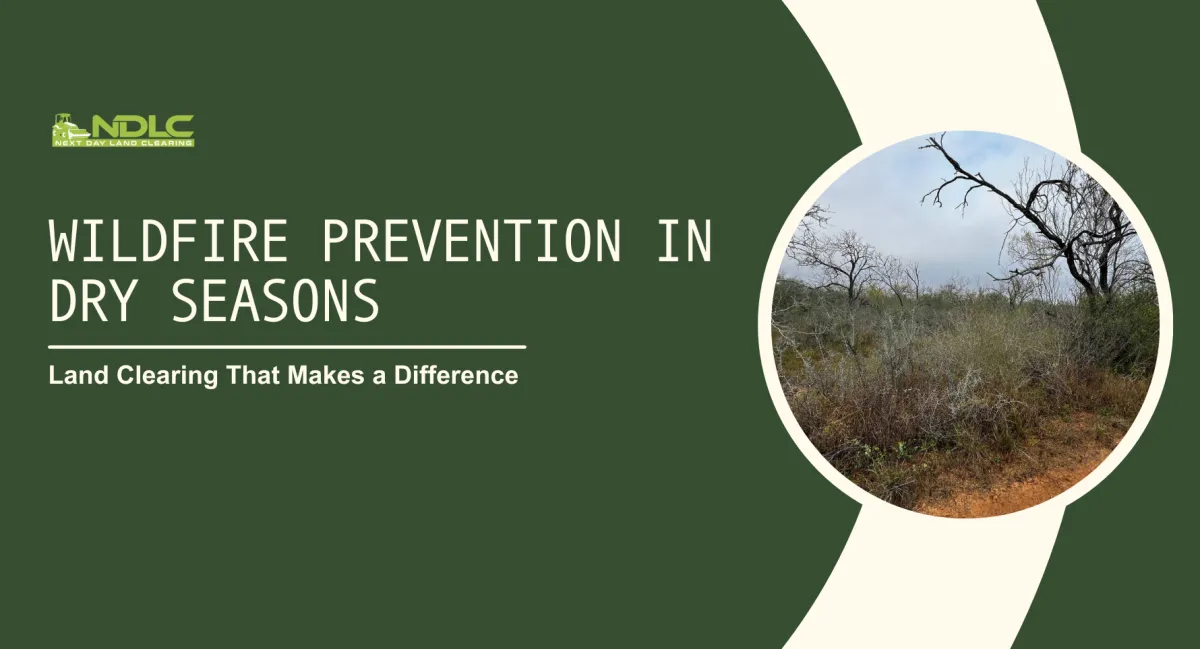
Wildfire Prevention in Dry Seasons
When Dry Seasons Turn Dangerous
The signs start small—crisper grass under your boots, a thin layer of dust settling on fence lines, hotter afternoons stretching deeper into fall. By late November, what used to be a mild shift in seasons now often turns into an extended dry spell across South Texas. Weather forecasts may only hint at “warmer and drier than usual,” but landowners know what that really means: wildfire conditions are quietly building.
And when the landscape dries out, risk skyrockets.
Wildfires don’t need lightning strikes. They don’t need a careless campfire. All it takes is:
A spark from machinery
A knocked-down power line
A burning cigarette tossed from a passing vehicle
Heat reflected off rocks or metal
Spontaneous combustion in piled brush
In the right conditions, flames can travel across overgrown or unmanaged land faster than most property owners can respond.
Yet here’s the good news: wildfire prevention isn’t just possible—it’s highly achievable. With the right land-clearing strategies, brush management, and fuel reduction plans, you can drastically lower the risk of fire on your land and protect what matters most.
This blog walks you through exactly how strategic land clearing creates safer acreage, safer homes, and safer ranch operations—especially in these extended dry seasons we now face.
Understanding How Wildfires Spread in South Texas
Wildfires behave differently depending on region, vegetation type, and terrain. South Texas landscapes are especially vulnerable because of the mix of:
Thick cedar regrowth
Tall, dry grasses
Mesquite thickets
Low-moisture brush piles
Rocky soil that retains heat
Before you can reduce risk, it helps to understand what fuels fires in this environment.
1. Brush Density Becomes Fuel Density
When cedar, mesquite, huisache, and underbrush pack tightly together, they act like a chain. Once fire hits one section, it travels quickly to the next—especially if vegetation has low moisture content.
2. Ladder Fuels Pull Flames Upward
Dead limbs, shrubs under trees, and overgrown saplings act like “ladders,” drawing fire up into tree canopies, where flames grow hotter and harder to control.
3. Rocky Soil Creates Heat Pockets
Rocks absorb and radiate heat all day, turning brush piles or dry grasses nearby into ignition points. This is why clearing rocky areas matters more than many people realize.
4. Wind Tunnels Push Fire Forward
Open fields bordered by thick brush create natural wind tunnels. Once fire gets inside one of these pathways, it spreads with alarming speed.
5. Human Activity Is the #1 Cause
Many landowners are surprised to learn this—but it’s true. The majority of wildfires in South Texas come from human actions, not natural causes.
And here’s where proactive land clearing becomes one of the most effective protection tools available.
The Role of Land Clearing in Wildfire Prevention
Land clearing—done intentionally, strategically, and professionally—interrupts every factor listed above. It breaks the continuity of brush, removes excess fuel loads, and creates defensible zones designed to stop or slow fire movement.
Below are the most impactful clearing approaches when reducing wildfire risks on residential, ranch, and commercial properties.
Create Defensible Space Around Your Home or Barn
Defensible space is a fire-resistant buffer surrounding your structures. For many South Texas properties, building this space requires:
Removing cedar and thick brush
Clearing all ladder fuels
Maintaining shorter grass
Creating pathways for firefighters
Eliminating anything touching or overhanging the building
Even if you have several acres, the 30–100 feet around each structure matters most. This cleared perimeter dramatically improves your chances of stopping fire before it reaches the home or barn.
Action Step:
Schedule forestry mulching South Texas or brush clearing services before the next dry spell. These methods remove dense, unwanted vegetation without disturbing healthy soil structure.
Reduce Fuel Loads Across the Property
Fuel isn’t just firewood or brush piles—it’s anything that can burn. On acreage, this often includes:
Fallen limbs
Dead trees
Thickets of mesquite regrowth
Tall unmanaged grasses
Old fence rows overrun with shrubs
Disconnected brush piles scattered throughout the land
Reducing these fuel loads is one of the most effective wildfire prevention strategies available.
Why Forestry Mulching Works Especially Well
Forestry mulching leaves beneficial organic material on the ground—but small, evenly spread, and less prone to ignition. Instead of large piles, the mulch layer:
Retains some moisture
Breaks down naturally
Reduces wind exposure
Doesn’t contain concentrated heat pockets
Compared to dozer piles, which become dangerous tinderboxes, forestry mulching dramatically reduces fire hazards.
Clear Firebreaks to Contain Fire Spread
A firebreak is a stripped or thinned path designed to stop flames in their tracks. Firebreaks are especially critical for:
Ranch land clearing
Agricultural land clearing
Residential acreage
Hunting properties
Commercial land clearing services on large sites
Depending on your land layout, firebreaks can be created with:
Forestry mulching along fence lines
Bulldozing services to open wide safe zones
Rock crushing services to clear rocky areas and make them less flammable
Lot clearing South Texas to reduce heavy vegetation near home sites
Where Firebreaks Matter Most
Along property boundaries
Around structures
Between tree stands and grasslands
Near roads, driveways, or trails
Around equipment storage areas
Surrounding electrical infrastructure
Firebreaks don’t eliminate wildfire risk—but they slow it, guide it, and often give responders the chance they need to stop it.
Special Risks That Require Professional Attention
Some land conditions significantly increase wildfire danger, and they shouldn’t be managed alone. Here’s when bringing in site work specialists is not just helpful—but necessary.
1. Dense Cedar Growth
Cedar trees are among the biggest fire hazards in South Texas. They dry out early, burn hot, and spread flames rapidly.
If your property needs to:
Remove cedar trees South Texas
Clear a cedar thicket
Open up land for ranching or building
…professional crews ensure removal is thorough, safe, and compliant with environmental expectations.
2. Rocky Soil or Sloped Terrain
Wildfires on slopes move far faster than on flat land. Rocky areas worsen the danger by retaining heat.
Choosing rock crushing San Antonio and land grading services can improve soil, increase moisture retention, and reduce ignition risk long-term.
3. Overgrown Fence Lines
Fence lines become natural “fuse lines” for wildfires.
They’re notoriously hard to maintain, and once overgrown, they move flames fast.
Professional fence line clearing services remove brush from these narrow corridors without damaging posts or wire.
4. High-Traffic Ranch or Agricultural Areas
Hunting vehicles, ATVs, tractors, and work trucks all create sparks—especially around rocks, dry grasses, or brush piles.
Ranch cleanup South Texas is one of the best ways to manage these zones and reduce ignition points.
5. Areas Requiring Heavy Machinery
Bulldozers, rock crushers, and forestry mulchers must be operated responsibly in fire-prone conditions. Experienced land-clearing operators know how to:
Avoid overheating
Prevent blade sparks
Manage dry mulch
Maintain safe zones
Follow weather safety guidelines
Professional oversight is one of the most important—and overlooked—elements of safe wildfire prevention work.
How Managed Land Helps Prevent Future Wildfires
Clearing land reduces immediate fire risks, but the long-term benefits are just as powerful.
Here’s what happens when your land is properly managed year-round:
Improved Soil Health = Better Moisture Retention
Grass and soil that hold moisture are far less likely to ignite.
Land grading services and responsible mulching improve:
Soil structure
Water absorption
Drainage patterns
Native grass regrowth
Healthy grass is nature’s wildfire shield.
Better Habitat for Wildlife
Overgrown, unmanaged land increases fire danger and reduces wildlife diversity. In contrast, selective clearing:
Opens up natural corridors
Reduces predatory hiding spots
Helps game species thrive
Encourages balanced plant life
Which is especially beneficial during hunting season or ranching operations.
Easier Access for Emergency Vehicles
A well-cleared property gives emergency responders a fighting chance.
Wide driveways, accessible turnarounds, and clean pathways make a life-saving difference.
If you need this type of improvement, driveway preparation services, lot clearing, and bulldozing services can reshape access quickly and safely.
Reduced Heat Zones and Lower Spread Potential
When brush is thinned and fuel loads are removed, fire loses momentum.
This is especially effective when you’ve:
Cleared understory brush
Removed dead trees
Eliminated ladder fuels
Created firebreaks
Managed cedar regrowth
Strategic land clearing works with the natural environment rather than against it.
Property Areas Most at Risk During Dry Seasons
Not all parts of your land carry equal danger. Understanding hotspots helps you prioritize clearing work.
1. Sloped areas
Fires travel uphill fast—up to four times faster than on flat ground.
2. Cedar thickets
These ignite quickly and burn extremely hot.
3. Dry pastures and unmowed fields
Tall grasses act like gasoline.
4. Rocky terrain
Heat pockets raise ignition risk.
5. Fence lines
Overgrown fences are wildfire “highways.”
6. Structures surrounded by brush
Homes, barns, mobile homes, RVs, and sheds are often threatened by the fuel right next to them.
7. Spots with equipment
Welding, grinding, tractors, or parked vehicles can spark fires instantly.
Proper clearing eliminates these hotspots before they become higher-risk ignition zones.
A Seasonal Strategy That Works Year After Year
Wildfire prevention isn’t a one-time task—it’s an annual plan.
Here’s a simple seasonal breakdown that keeps your property safe:
Late Winter/Early Spring
Remove dead limbs
Mulch spring regrowth
Begin fence line clearing
Grade slopes for drainage
Summer
Mow grass regularly
Reduce fresh regrowth
Address erosion issues
Clear around barns and pens
Fall
Remove accumulated brush
Prepare defensible spaces
Clear access roads for emergency use
Schedule Next day land clearing for high-risk zones
Winter
Review long-term improvements
Invest in affordable land clearing services before spring growth
Remove any new cedar saplings or brush clusters
With a simple schedule, you stay ahead of both fire conditions and land overgrowth.
Choosing the Right Land Clearing Partner Matters
Not all clearing work is equal—especially when wildfire prevention is the goal.
The best land-clearing company for this kind of project should:
Understand South Texas vegetation
Work safely in dry, high-risk conditions
Provide multiple service options (mulching, bulldozing, rock crushing, grading)
Offer quick turnarounds
Keep customer satisfaction at the center
Deliver accurate quotes
Communicate clearly on site plans
Next Day Land Clearing is known across the region for:
Next day land clearing availability
Fast brush removal
Top-rated brush clearing
Professional land clearing
5-star land clearing services
Specialized land clearing equipment
Skilled land clearing operators
When fire season is coming—or already here—you want a team you can trust with land that is important to you.
Simple Steps to Get Started Today
If you’re concerned about wildfire risks on your property, here’s what to do next:
1. Walk your land.
Look for:
Dry or tall grass
Brush piles
Cedar clusters
Overgrown fence lines
Dead limbs or fallen trees
Thick vegetation near structures
2. Decide what needs to be cleared first.
Start with the highest-risk areas: around structures, fence lines, cedar thickets, or rocky slopes.
3. Get a quote from a reliable South Texas land-clearing contractor.
With wildfire-related work, speed and reliability matter.
4. Schedule clearing sooner rather than later.
Once conditions reach “red flag” levels, options become more limited—and the risks far greater.
Ready to Protect Your Land This Dry Season?
Wildfires may be unpredictable, but your preparation doesn’t have to be.
Strategic land clearing is one of the simplest, most effective ways to safeguard your acreage, your livestock, your home, and your long-term investment.
If you’re ready to reduce your fire risk with professional-grade clearing—quick, affordable, and done right—we’re here to help.
Ready to take the next step?
Call us today at 210-864-8342 for a FREE estimate and let's discuss your project! Visit Nextdaylandclearing.com for information.
